You start the morning sharp. By 2 PM, you're staring at your inbox unable to decide whether to reply, archive, or flag an email. It's not laziness. It's decision fatigue, and it's one of the most overlooked productivity killers.
Research from psychologist Roy Baumeister and later replicated by dozens of labs shows that your brain has a finite daily budget for decisions. Every choice you make, from what to eat for breakfast to which project to tackle first, draws from that budget. When it runs dry, your judgment gets sloppy, your willpower collapses, and you default to the easiest option (which is usually doing nothing).
This isn't a character flaw. It's biology. And once you understand how it works, you can design your day to protect your best thinking for what actually matters.
What Is Decision Fatigue, Exactly?
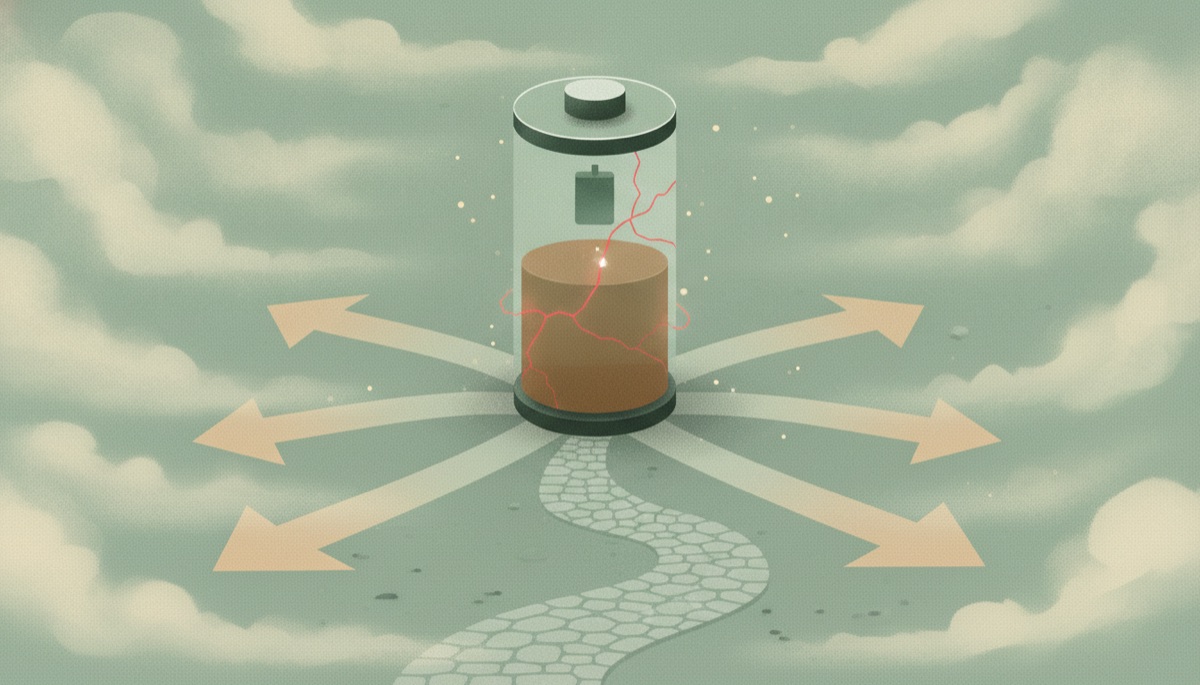
Decision fatigue is the deteriorating quality of decisions you make after a long session of decision making. Your brain literally runs low on the glucose it needs for executive function. Think of it like a phone battery. Start the day at 100%. Every choice costs 1-2%. By mid-afternoon, you're running on fumes.
A famous 2011 study by Danziger, Levav, and Avnaim-Pesso analyzed over 1,100 parole rulings by Israeli judges. prisoners whose cases were heard early in the morning received parole about 65% of the time. By the end of a session, that number dropped to nearly zero. The judges weren't being cruel. They were mentally exhausted and defaulted to the safest, easiest choice: deny parole.
You do the same thing. You default to checking Slack instead of writing that proposal. You reschedule the hard task instead of starting it. You order takeout instead of cooking. Same mechanism, lower stakes.
The Hidden Decision Tax on Your Day
The average adult makes about 35,000 decisions per day. Most are trivial. Cereal or toast? Reply now or later? Which tab do I open next?
But trivial decisions still cost mental energy. And here's the kicker: your brain doesn't distinguish between important and unimportant decisions. Choosing what shirt to wear uses the same cognitive resources as choosing which client to prioritize.
That's why Steve Jobs wore the same black turtleneck every day. That's why Obama only wore gray or blue suits. They weren't being eccentric. They were protecting their decision budget for things that actually mattered.
5 Strategies to Reduce Decision Fatigue
Understanding the problem is the easy part. Here's what you can actually do about it.
1. Front-load your hardest decisions
Your decision battery is fullest in the first few hours after waking. Use that window for your most important, most cognitively demanding work. Don't waste it on email, Slack, or planning your day. Those are low-value decisions that can wait.
If you have to write, strategize, or solve complex problems, do it before lunch. Period.
2. Automate or eliminate recurring choices
Every decision you can remove from your day is energy saved for something that matters.
Some practical ways to do this:
- Meal prep on Sundays. You now have zero "what's for lunch" decisions Monday through Friday.
- Wear a uniform. It doesn't have to be a black turtleneck. Just reduce your wardrobe to things that all work together.
- Set default responses. "I'll check my calendar and get back to you by end of day" is a default that saves you from deciding on the spot.
- Create templates. Email templates, meeting agendas, project briefs. If you write it from scratch more than twice, template it.
The goal is to make fewer unique decisions per day. Every automated choice is a cognitive rebate.
3. Time-block your day the night before
This is the single highest-leverage move against decision fatigue.
When you wake up and your day is already mapped into time blocks, you've already made the big decisions. You know what you're working on at 9 AM, when you're taking breaks, and when you're handling admin. You don't have to decide in the moment.
The alternative is what most people do: wake up, look at a massive to-do list, feel overwhelmed, and start with whatever feels easiest. That's decision fatigue winning before you've even started.
Spend 5-10 minutes each evening planning tomorrow. Assign specific tasks to specific time slots. When morning comes, you just execute.
4. Use the "good enough" rule for low-stakes decisions
Perfectionism is decision fatigue in disguise. When you spend 20 minutes choosing between two similar options, you're burning decision calories on something that barely matters.
For low-stakes decisions (what to eat, what movie to watch, which font to use), apply a simple rule: if you can't decide in 60 seconds, flip a coin or pick the first option. The cost of a suboptimal choice is almost always lower than the cost of 20 minutes of indecision.
Save your deliberation energy for decisions where the outcomes actually diverge. Which job offer to take. Whether to launch a new product. How to handle a difficult conversation. Those deserve your full attention.
5. Take real breaks between decision-heavy blocks
Your decision battery doesn't recharge at your desk while scrolling Twitter. It recharges with genuine mental rest: a short walk, staring out a window, a brief conversation that doesn't require problem-solving.
Research shows that even a 10-minute walk without your phone can significantly restore executive function. The key is that the break must be cognitively passive. Reading articles, checking social media, or browsing Reddit doesn't count. Your brain is still making decisions (read this, skip that, react to this).
Between your most demanding work blocks, step away completely. Let your brain idle for a few minutes. It's not wasted time. It's refueling.
Why Most Productivity Systems Ignore This
Most productivity advice focuses on time management: how to fit more into your day. But time isn't your scarcest resource. Attention and decision energy are. You can have eight free hours and still get nothing meaningful done if your decision battery is at 5%.
This is why having a system matters more than having motivation. A system reduces the number of in-the-moment decisions you need to make. Your morning routine runs on autopilot. Your work blocks are pre-assigned. Your meals are planned. Your defaults are set.
When the system handles the structure, your brain is free to focus on the actual work.
The AI Angle: Why Delegation Works
Here's something interesting. Researchers at Carnegie Mellon found that people who delegate even small decisions to external systems (apps, assistants, pre-set rules) report higher satisfaction and better performance on the tasks they keep for themselves.
It's not about being lazy. It's about resource allocation. Every decision you offload to a system, a tool, or a routine is cognitive capacity you get to spend on work that actually requires your judgment.
This is exactly the thinking behind AI-powered daily planning tools. When an app suggests your time blocks, tracks your habits, and nudges you at the right moment, you're not abdicating responsibility. You're protecting your finite decision-making energy for the choices only you can make.
A Simple Decision Fatigue Audit
Try this exercise today. For one day, write down every decision you make that takes more than a few seconds. At the end of the day, categorize each one as "high value" or "low value."
You'll probably find that 80% of your decision energy goes to low-value choices. What to eat. When to check email. Which task to start next. Whether to go to the gym now or later.
Once you see it on paper, the pattern becomes obvious. And once you see the pattern, you can start building systems to eliminate those low-value decisions entirely.
Your brain has about 4-6 hours of quality decision-making in it per day. Use them wisely. Protect them ruthlessly. And let systems handle the rest.
Ready to plan your day the ADHD-friendly way?
Habidu is your AI daily coach - gentle nudges, tiny steps, zero shame spirals. Download it free:

