You know that feeling around 2 PM when your brain turns to mush and no amount of coffee helps?
What if you could hit a reset button and come back sharp in 10 minutes, without stimulants, without napping, without leaving your chair?
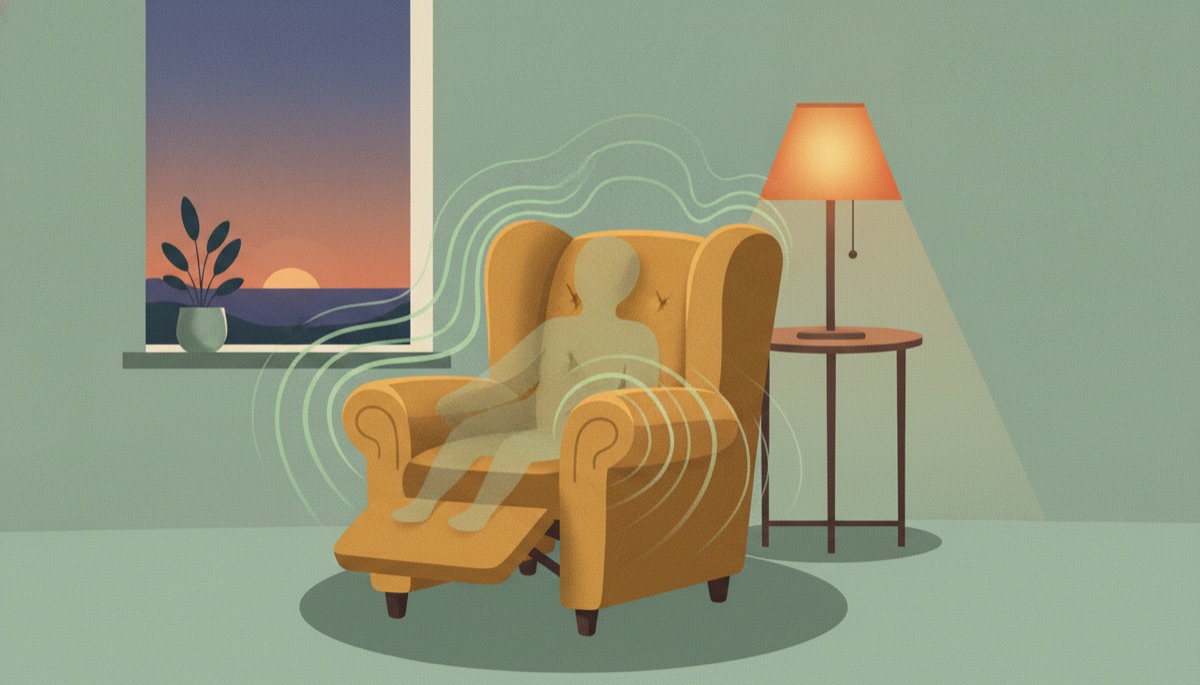
That's what NSDR does. Non-sleep deep rest is a guided relaxation protocol popularized by Stanford neuroscientist Andrew Huberman. It combines body scanning, breathwork, and yoga nidra techniques to put your nervous system into a deeply restorative state while you stay fully conscious.
And the research behind it is surprisingly strong.
What NSDR Actually Does to Your Brain
NSDR isn't meditation. You're not trying to clear your mind or sit with your thoughts. You're following a structured body-scan protocol that guides your nervous system into a specific physiological state: deep parasympathetic rest while remaining awake.
Here's what happens when you practice NSDR:
Dopamine restoration. Internal Stanford research suggests yoga nidra-type practices can restore dopamine levels by up to 65% in a single session. Dopamine isn't just about reward. It's the neurochemical that gives you the motivation to start tasks and sustain focus. If you've been grinding all morning, your dopamine tank is low. NSDR refills it.
Cortisol reduction. NSDR activates your parasympathetic nervous system, which directly lowers cortisol. A 2020 study published in the International Journal of Yoga found that yoga nidra significantly reduced cortisol and anxiety levels in participants after just a few weeks of practice.
Improved learning and neuroplasticity. Huberman has noted that periods of deep rest after learning accelerate memory consolidation. Your brain uses idle time to wire in what you just practiced. A 10-minute NSDR session after a deep work block doesn't just feel good. It helps you retain what you learned.
Better sleep that night. Oura Ring's research team found that NSDR practitioners reported improved sleep quality, especially when practiced in the afternoon. By lowering your baseline stress during the day, you set up your circadian rhythm for deeper nighttime recovery.
Why NSDR Works Better Than a Nap or More Coffee
Coffee masks fatigue. It blocks adenosine receptors so your brain can't tell you're tired, but the fatigue keeps accumulating. By 3 PM, the mask wears off and you crash harder.
Naps work, but they have downsides. If you nap longer than 20 minutes, you risk sleep inertia, that groggy, disoriented feeling that takes 30+ minutes to shake. And napping too late in the day disrupts your nighttime sleep.
NSDR gives you the restorative benefits of rest without the grogginess. You stay conscious the entire time. When the 10 minutes are up, you open your eyes and you're immediately alert, but calm. Not wired. Not sluggish. Just clear.
Think of it as the difference between rebooting your computer (NSDR) and just turning up the screen brightness (coffee).
How to Practice NSDR
The protocol is simple. That's the point.
1. Lie down or recline. A chair works too. You don't need a mat or special setup. 2. Close your eyes. 3. Follow a guided script. Huberman offers free NSDR scripts on his website. YouTube also has dozens of guided sessions ranging from 10 to 30 minutes. 4. Follow the body scan. You'll be instructed to focus attention on different body parts in sequence. Hands, feet, arms, torso, face. Just notice each area. Don't try to relax it. The relaxation happens on its own. 5. Let your mind wander. Unlike meditation, you're not fighting distractions. If thoughts come up, let them. The body scan keeps your nervous system on track regardless. 6. Open your eyes when the script ends. That's it.
Start with 10 minutes. You can go up to 20 or 30 if you have time, but 10 minutes is enough to get measurable benefits.
No app required. No subscription. No learning curve. Just a guided audio track and 10 minutes.
When to Use NSDR for Maximum Impact
Timing matters. Here are the three windows where NSDR delivers the most value:
The afternoon trough (1-3 PM). This is when your circadian rhythm naturally dips. Instead of fighting it with a third coffee, use NSDR to restore dopamine and lower cortisol. You'll come out of it with genuine focus, not borrowed energy that you'll pay for later.
After a deep work session. If you just spent 90 minutes in focused work (which is about the limit of your ultradian cycle), follow it with 10 minutes of NSDR. This combination of intense output followed by deliberate rest is how your brain consolidates learning and recovers for the next cycle.
Before a stressful event. Have a presentation, difficult conversation, or high-stakes meeting coming up? Ten minutes of NSDR beforehand lowers your cortisol and puts you in a calm, focused state. Athletes use similar protocols before competition. The same principle applies to cognitive performance.
Making NSDR a Daily Habit (Without Overcomplicating It)
The biggest mistake people make with new health habits is trying to do them perfectly. NSDR is forgiving by design. Here's how to make it stick:
Attach it to an existing routine. Do NSDR right after lunch, or immediately after your last morning work block. The habit needs a trigger, not willpower.
Start embarrassingly small. Five minutes counts. Don't aim for 20 minutes on day one. Build the identity of "someone who does NSDR" before you optimize the duration.
Track it. Use a habit tracker or your daily journal to check off NSDR sessions. Streaks build momentum. Even tracking "did I do it or not" for a week makes you more likely to continue.
Don't stress about "doing it right." NSDR works even if your mind wanders the entire time. The body scan is doing the heavy lifting at the nervous system level. You don't need to feel zen for it to work.
Time-block it. Put it on your schedule like any other appointment. If it lives in the "maybe I'll get to it" zone, you won't get to it. Block 10 minutes, set a recurring reminder, and treat it as non-negotiable.
What You'll Notice After a Week
Most people report changes within the first 3-5 sessions:
- Afternoon energy crashes become less severe
- It's easier to start the second half of the workday
- Sleep quality improves
- General anxiety or restlessness decreases
- Focus returns faster after interruptions
The compound effect kicks in around week two. Your baseline stress levels drop. Your afternoon productivity increases. You stop relying on caffeine to compensate for natural energy dips.
None of this is magic. It's neurobiology. Your nervous system was designed to cycle between stress and rest. Most modern workflows skip the rest part entirely. NSDR is the fastest, lowest-friction way to put it back.
Getting Started Today
You don't need to buy anything or learn a technique. Here's your launch plan:
1. Go to YouTube and search "NSDR 10 minutes" or visit hubermanlab.com/nsdr for free guided scripts 2. Pick a time tomorrow afternoon (1-3 PM is ideal) 3. Set a reminder for that time 4. When the reminder goes off, close your door, put in headphones, and press play 5. When it's over, notice how you feel
That's the entire onboarding process.
The people who benefit most from NSDR are the ones who are most skeptical at first. If you think 10 minutes of lying still can't possibly compete with a double espresso, try it once. The data speaks for itself.
Ready to plan your day the ADHD-friendly way?
Habidu is your AI daily coach - gentle nudges, tiny steps, zero shame spirals. Download it free:

